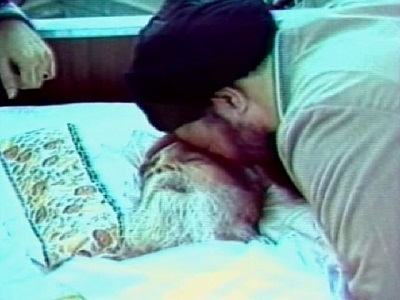
After a few days of surgery, doctors gradually diagnosed symptoms such as shortness of breath, heart failure, and fluid accumulation in Imam's lungs. On the 9th of June, doctors also discovered a blockage in his urinary tract.
After the surgery, Imam's general condition seemed favorable, but gradually, as the days passed after the surgery, doctors began to detect signs that his health was not returning. On the 8th of June, Imam Khomeini suffered from shortness of breath, and doctors discovered heart failure and fluid accumulation in his lungs. On the 9th day, the issue of urinary tract obstruction and urine accumulation in the bladder was raised. Medical reports state that pressure in the lower abdomen was sensitive and accompanied by discomfort.
But despite all the physical pain and discomfort caused by the illness and the treatment methods, the Imam always treated the medical staff with his usual paternal kindness and cheerfulness. In the memoirs of Mr. Seyyed Abdul Hossein Tabatabaei, it is stated in this regard: "The Imam was truly unparalleled in the field of patience and tolerance. Sometimes it was necessary to insert a thick needle through the skin into his vein to administer various serums and injectable medications.
The Imam tolerated this issue with great calmness and patience, without any signs of pain appearing on his face. By observing the course of events, he easily tolerated this issue; it was as if he had a strange power that could neutralize the feeling of pain, which is the body's natural reaction. After the surgery, the Imam had very difficult days. He did not say a single word and always treated the medical and nursing staff with kindness and cheerfulness, and sometimes he apologized to them for causing him trouble.» (The Book of Patience, page 188)
Receiving messages of happiness about the health of Imam Khomeini (AS) from different parts of the world
Officials, personalities, and heads of countries around the world sent messages and telegrams expressing their happiness over the improvement in Imam's physical condition after surgery and praying for his full recovery. On June 21, messages were received from the Friday prayer imam of the city of Antananarivo, the capital of Madagascar, Allama Seyyed Hussein Fadlallah, representing the Muslim community of Jabal Amel, Lebanon, scholars and students of Lahore, Pakistan, and the Islamic Revolutionary Organization of the Arabian Peninsula.In the country, as in previous days, institutions and organizations held prayer ceremonies for the Imam's health. Students at Allameh Tabatabaei University and employees at the Central Bank headquarters were among the institutions holding prayer ceremonies on this day. The Islamic Propaganda Organization of Tehran Province also issued a statement on this day, expressing gratitude to God for the recovery of Imam Khomeini (AS), and inviting people to observe a recommended fast on June 13 for the Imam's speedy recovery and long life.
Imam Khomeini's attention to prayer and remembrance of God until the last days of his life
Imam's adherence to early prayers and the advice of those around him to do so are mentioned in the memoirs of his beloved daughter, Mrs. Sediqah Mostafavi: "After a few days, the disease spread rapidly throughout the body. Other faces were contorted and hopes were fluctuating. We received information more from the doctors' appearances and were less inclined to ask questions about the situation. In the meantime, whenever we went to feed him, he would not forget his moral advice. He would tell me and the nurses several times: "The path to the hereafter is difficult, do not sin, leaving sin is easier than God's punishment, pray early prayers even if it is on the sidewalk. Once, when I asked him how he was, did he have any pain?
He said: "My whole body is in pain." But he would not express any pain to the residents except when the doctors and we first asked him.Sometimes when we would bring our faces close to him, we would hear the sound of his remembrance and glorification. Sometimes when he opened his eyes, if he saw something wrong, he would warn him. For example, once they said to my nephew, Agha Masih, “Why have you stopped studying? Go back to Qom quickly. I have not given an hour of my study time to anything else during my entire education.”
I once heard him say, “O God, accept me again.” His greatest worry was during those times of prayer. He would constantly open his eyes and ask about the time of prayer. My late brother, on the advice of doctors to ensure that painkillers would have an effect, said, “Don’t ask about the time so much. We will warn you at the time of prayer.
However, despite this, it was the remembrance of God that prevented the effects of weakness caused by the medicines and illness. Several times they went to Ali Agha, my nephew, and brought him to their service.”
(Book of the Chapter on Patience, page 49)