Iran monitors US compliance moment-by-moment, won’t implement MoU unilaterally: FM spox
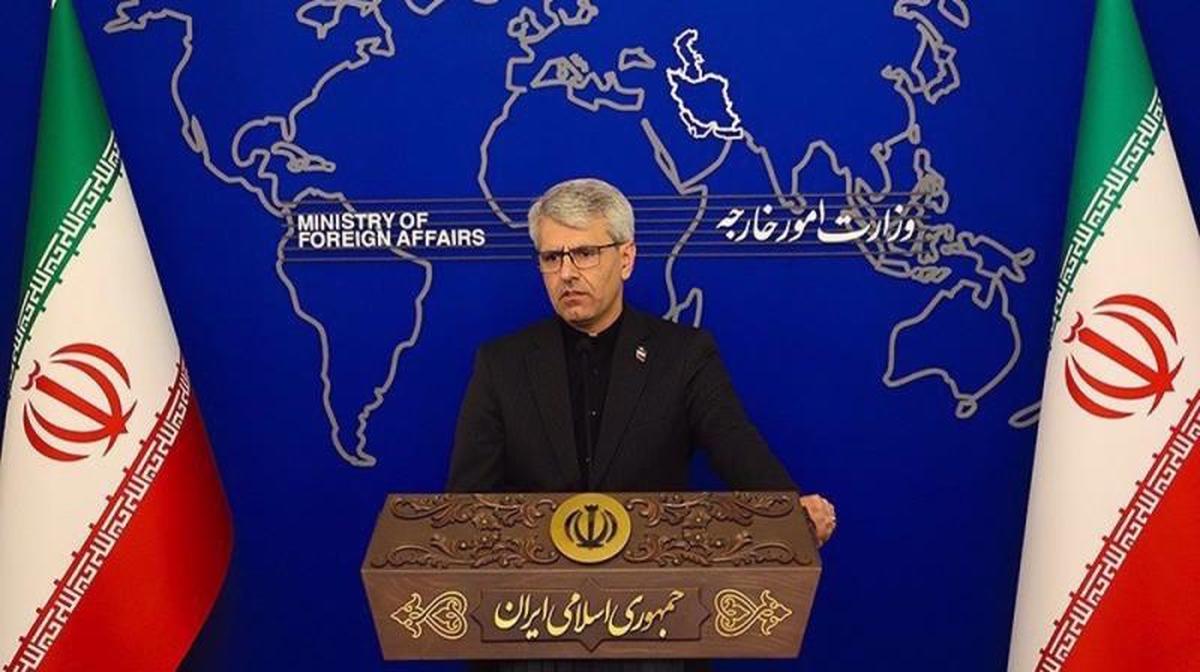
Iran’s Foreign Ministry spokesman has declared that Tehran will monitor the United States’ compliance with the war‑termination memorandum of understanding (MoU) “moment‑by‑moment” and warned that the Islamic Republic will not implement its commitments unilaterally.
“The principle of ‘commitment in exchange for commitment’ in the negotiations means that we will implement our commitments only as long as the other side implements its commitments,” Esmaril Baghaei said in a press briefing on Tuesday.
“No commitment is supposed to be implemented unilaterally.”
The spokesman&#۳۹;s remarks came as the United States and Iran remain at odds over the implementation of the ۱۴‑point MoU signed in mid‑June, which was supposed to end the US‑Israeli war of aggression against Iran and provide for the lifting of the naval blockade and the release of frozen Iranian assets.
Baghaei said Tehran had never expected the diplomatic process to proceed without challenges, given the deep mutual mistrust and bitter past experiences of US breaches of commitments and Israeli obstruction.
Lebanon ceasefire tests MoU
The spokesman said the MoU&#۳۹;s first clause, which requires a cessation of military operations on all fronts, including Lebanon, is the most critical provision.
“The text of the memorandum is drafted very precisely and clearly. Both in clause one, which specifies that the cessation of war on all fronts must include Lebanon, and in the fact that the United States, as the other party to the memorandum, must adhere to its commitments and do whatever is necessary regarding Lebanon to ensure that the Zionist regime&#۳۹;s military aggression against Lebanon is halted.”
Baghaei warned that if the US fails to rein in Israeli violations, Iran will not hesitate to use all available tools to protect its national security and interests.
Addressing reports of a possible meeting between Iranian and American officials in Doha, Baghaei categorically rejected that any such meeting had been planned.
"We had no plans for a meeting with American officials at any level in the coming days, so there was nothing to cancel," he said.
"What will likely take place in Doha tomorrow is a discussion on the implementation of certain clauses of the MoU, including the release of Iran&#۳۹;s frozen assets, which will be conducted with Qatari officials. I emphasize that no meeting at any level with the American side has been scheduled for the coming days."
“We have not yet entered the negotiation phase for the final agreement. According to Article ۱۳ of the Memorandum of Understanding, the start of negotiations for the final agreement is contingent upon the initiation of the implementation of Articles ۱, ۴, ۵, ۱۰, and ۱۱, and the continuation of their implementation.”
He said while the US has issued the necessary licenses for Iranian oil exports under Article ۱۰, the process for releasing Iran&#۳۹;s blocked funds under Article ۱۱ is still being pursued.
Martyred Leader’s funeral arrangements
Baghaei also detailed Foreign Minister Abbas Araghchi&#۳۹;s recent visit to Iraq, describing it as "very important" and the first such visit after the formation of Iraq&#۳۹;s new government.
He said the visit focused on strengthening bilateral ties across political, economic, security and border cooperation, and on coordinating the funeral ceremonies for the martyred Leader of the Islamic Revolution Ayatollah Seyyed Ali Khamenei in Iraq.
“The Iraqi people are eagerly awaiting to participate in the farewell ceremony for the martyred Leader of the Islamic Revolution, a figure known as a prominent scholar, a supreme religious authority, and a pioneer concerned with peace, security and dignity in the region.”
"The people of Iraq, like the people of Iran, are mourning the loss of the martyred Leader and his faithful companions," Baghaei said.
NATO chief&#۳۹;s admission of complicity
Baghaei also addressed the recent admission by NATO&#۳۹;s Secretary General that member states participated in the military aggression against Iran, calling it a clear confession of complicity in war crimes.
"This was not an unknown matter; it was clear to us that NATO and some of its member states were actively involved in the design, execution, and support of the aggressive actions of the United States and the Zionist regime against Iran," Baghaei said.
Baghaei added that the crimes committed in Minab, Lamerd and elsewhere in Iran can now be attributed as war crimes to NATO member states, their commanders, and decision‑makers.
"Some European countries are trying to justify and absolve themselves of participation in these crimes by claiming their support was limited to &#۳۹;technical and logistical support.&#۳۹; This in no way lessens the burden of the crime they committed. Under international law, any participation in the commission of the crime of aggression against other countries is prohibited and condemned," he said.
"Therefore, it is natural that the Islamic Republic of Iran will continue its formal demand for accountability from all parties that directly or indirectly played a role in the aggressive operations of the United States and the Zionist regime against Iran."
The Islamabad Memorandum of Understanding was signed on June ۱۸, ۲۰۲۶, bringing an end to the US‑Israeli war of aggression against Iran that began on February ۲۸.
The ۱۴‑point agreement committed both sides to an immediate and permanent cessation of military operations on all fronts, including Lebanon.
However, Israel has continued strikes in southern Lebanon in violation of the ceasefire, and the US has threatened Iran with renewed military action.
Iran has insisted that any final agreement is contingent on the full implementation of the MoU, particularly the cessation of hostilities in Lebanon.
مشاهده خبر در جماران