Military superiority in the Strait of Hormuz belongs to Iran: International Affairs Exper
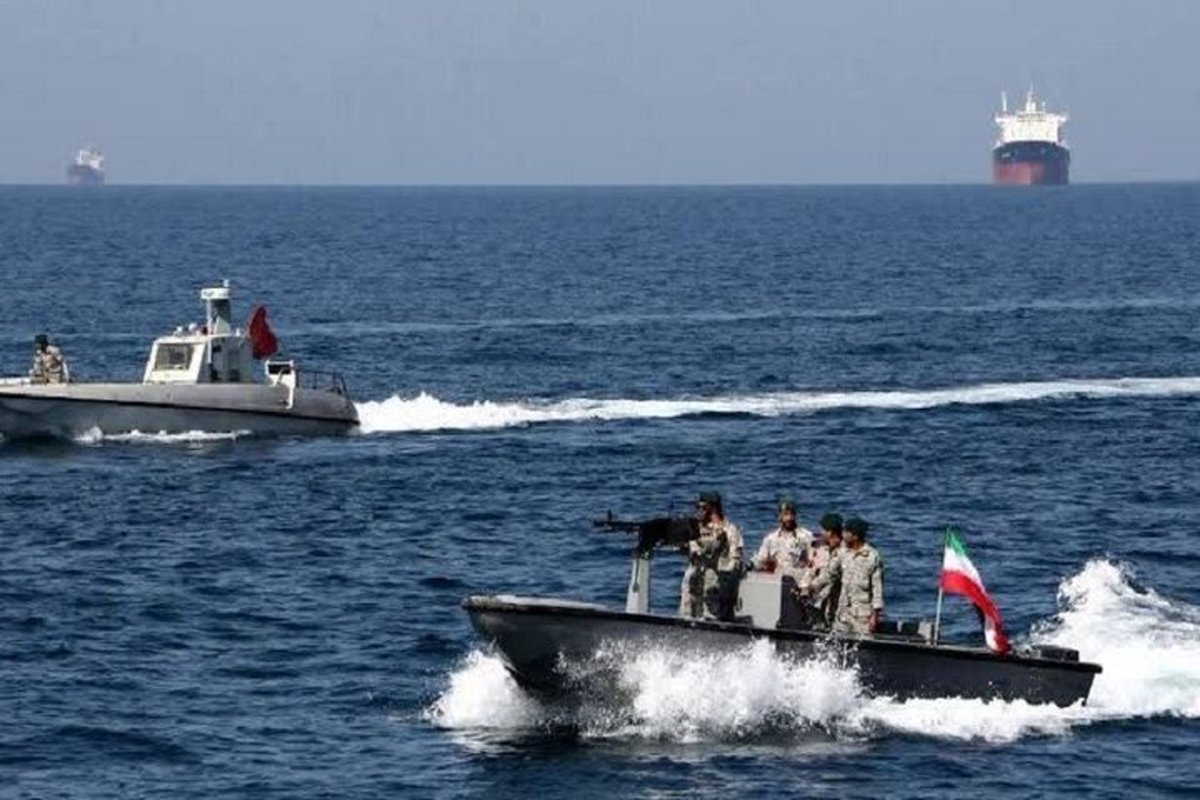
An international affairs expert stated that from the perspective of military analysts in NATO, Europe, China, and Russia, there is no military solution for the Strait of Hormuz, and even if one were assumed to exist, the advantage would lie with Iran
Tehran (ISNA) - In an interview with ISNA, Hamid Salehi pointed to Iran&#۳۹;s military superiority in the Strait of Hormuz, stating: "Currently, multiple internal, international, and economic pressures are being exerted on the United States, and these pressures are particularly evident in the Strait of Hormuz region. The Americans never imagined that Iran could block the Strait of Hormuz and bring conditions for U.S. forces to such a level of complexity."
He added: "Following several failed operations and attempts to declare victory through events like the Isfahan incident or escorting tankers, commanders of the U.S. Army and the Pentagon have now concluded that reopening the Strait of Hormuz lacks a military solution."
Strategic Dominance and Geographic Advantage
Salehi further noted: "Iran can utilize its military fortifications and equipment at all vital points of the Strait, from Qeshm Island to Greater and Lesser Tunbs and Abu Musa. Iran's superiority in the Strait of Hormuz is not merely due to military power, but stems from its geographical position and total strategic oversight over the world's energy gateway. This issue has undergone a serious review in Washington's new calculations. The withdrawal of U.S. warships to a radius of a thousand miles from Iran's maritime borders is a result of this shift in assessment. Due to Iran's high military capability, the plan for a military reopening of the Strait of Hormuz failed to materialize in practice."
The faculty member of the Political Science Department at Allameh Tabataba'i University mentioned that the Strait of Hormuz is shared between Iran and Oman, stating: "However, the geostrophic position of the Strait is such that safe navigation routes on the Omani side contain numerous reefs and shallow waters, forcing vessels to pass through the corridor controlled by Iran. This corridor is fully under Iranian military surveillance and, in addition to coastal capabilities, can be targeted from within Iranian territory."
He emphasized: "In the eyes of military analysts in NATO, Europe, China, and Russia, the Strait of Hormuz has no military solution, and even if one is assumed, the superiority belongs to Iran. This is why all plans presented by the U.S. thus far have faced failure."
U.S. Domestic Pressures and Israel&#۳۹;s Stance
Salehi stated that the United States is seeking to exit this war in any way possible, adding: "The U.S. wants to reach a nuclear agreement to enable a declaration of victory. The U.S. government is under intense pressure due to domestic issues, including hosting the FIFA World Cup, Congressional elections, and economic crises such as rising gas and fertilizer prices. Therefore, it is looking for a way to exit the war and control domestic conditions."
Contrastingly, he noted that Israel has no desire to end the war and seeks to expand it. "Just as the Zionists previously assassinated Iranian military commanders and leaders, they now aim to create internal chaos, unrest, and the disintegration of Iran. Following the events of October 7, Israel has suffered severe blows and is concerned about the growing power of the Resistance Axis, particularly Hezbollah in Lebanon. For this reason, it insists that Washington must not withdraw from this conflict and must continue it to preserve Tel Aviv's security structure."
Regional Dynamics and the Role of China
The analyst added: "Meanwhile, countries like the UAE, Bahrain, and even Saudi Arabia are in a position where they wouldn't mind if this war continues, as they know that an Iranian victory would destabilize the hegemony of the ruling oligarchic families in these countries. If this war ends with an Iranian victory, we will witness a profound transformation in the region—one that completely alters the power equations in the Persian Gulf and eliminates many Western-dependent political structures in Arab countries. Therefore, Bahrain and the UAE are engaging in behind-the-scenes consultations and agreements with the U.S. and Israel to maintain the path of conflict and prevent Iran's success."
Regarding China's performance, Salehi stated: "China showed that it no longer takes Washington's threats seriously. China's recent reaction to the U.S. Treasury's sanctions on some of its companies—openly declaring it does not recognize these sanctions and will continue cooperation with Iran—is indicative of this approach. By strengthening economic and political ties with Iran, China is moving toward weakening the U.S. global position while supporting the rise of the Yuan. On the other hand, Washington knows that if any power is to replace U.S. hegemony in the future, it is China."
He concluded: "In such an environment, the United States needs diplomatic moves to preserve its traditional standing. However, the reality is that the hegemony of the Dollar and U.S. unipolar power have long been questioned. This situation is the result of the Iranian people's steadfastness, the role of the Armed Forces, and reliance on the courage and nationalist spirit of Iranians."
(Source: ISNA news agency )
مشاهده خبر در جماران