
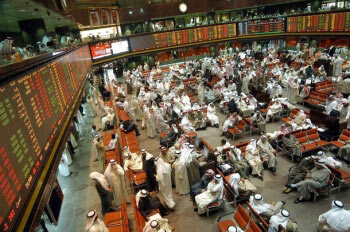
The Group of Governors and Heads of Supervision, the oversight body of the Basel Committee on Banking Supervision, announced a substantial strengthening of existing capital requirements and fully endorsed the agreements it reached on 26 July 2010. These capital reforms, together with the introduction of a global liquidity standard, deliver on the core of the global financial reform agenda and will be presented to the Seoul G20 Leaders summit in November.The Committee's package of reforms will increase the minimum common equity requirement from 2% to 4.5%. In addition, banks will be required to hold a capital conservation buffer of 2.5% to withstand future periods of stress bringing the total common equity requirements to 7%. This reinforces the stronger definition of capital agreed by Governors and Heads of Supervision in July and the higher capital requirements for trading, derivative, and securitization activities to be introduced at the end of 2011.Islamic banks are among the best capitalized banks in the world, and historically comply with inflexible standards of capitalization, Islamic Bank for capital requirements means that local banks already exceed norms set by the Bank for International Settlements (BIS) as part of the Basel III accord.Islamic Bank already has stricter capital requirements than what is proposed in Basel III. With the Islamic banks being amongst the best capitalized on a global scale, they are on the safe side compared to their European or US counterparts, Tier 1 and total capital requirements currently stand at 8 per cent and 12 per cent, respectively, which are already higher than the target 2019 ratios set by Basel III.
Source : Global Arab Network