Islam is a religion of moderation. It stands for the middle-path. It opposes every form of excess and extremism. Its principles and laws are based on a natural system of balance, appealing across cultural, ethnic and geographical boundaries. Some commandments of the Quran and the Prophet's practice on the same issues appear, on the face of it, to be, in some cases, particularly forceful, and, in other cases, unexpectedly soft and flexible. This is because these Quranic verses and Hadith statements have their own particular background and context, addressing particular persons or groups. This is in accordance with the wisdom and demands of the Islamic missionary imperative and the needs of the law. As the noted jurist Allama Shatibi notes in his book Al- Moafaqat:'When you ponder on the principles of the shariah you will find that they stand for moderation. If you perceive them as leaning towards a certain extreme, you should know that this is in opposition to another existing or expected extreme. Thus, generally speaking, the aspect of forceful stressing [in some principles of the shariah] is related to the need for warning, or in order to instill fear, with regard to those people whose religion is faulty or who are lax in matters of religion. [On the other hand] is the aspect that inclines to grace, flexibility and hope, which is with regard to those who are overwhelmed by extremes and fears [in matters of religion]' (Al-Moafaqat: 167/3).The Quran refers to those who truly follow Islam as the ummat-e wasat or 'the community of the middle-path'. As the Quran puts it, 'Thus, have We made of you an ummat justly balanced, that ye might be witnesses over the nations, and the Messenger a witness over yourselves' (2:143). Numerous Quranic commentators have interpreted the term ummat-e wasat to mean 'the moderate community' (ummat-e muatadal).
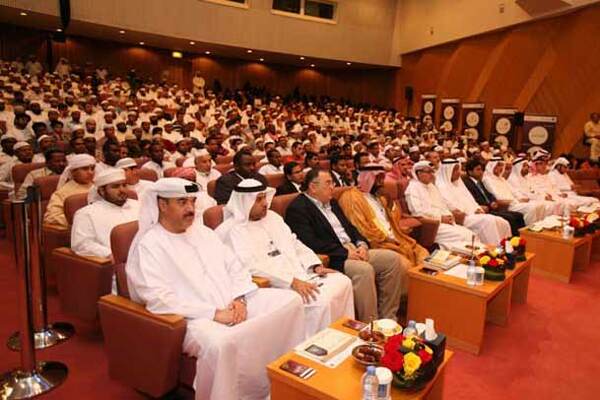
International conference on Moderation in Islam
News ID:
16244